Skip to content

Mohan Atreya

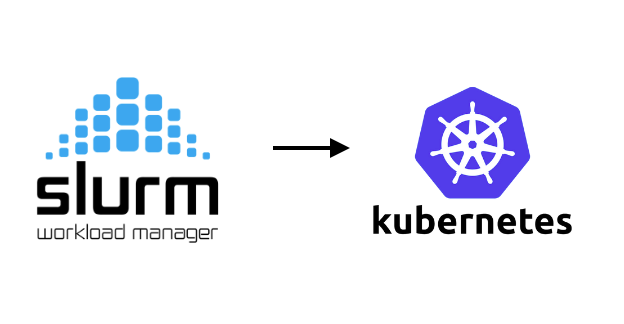
From Slurm to Kubernetes: A Guide for HPC Users

If you've spent years submitting batch jobs with Slurm, moving to a Kubernetes-based cluster can feel like learning a new language. The concepts are familiar — resource requests, job queues, priorities — but the vocabulary and tooling are different. This guide bridges that gap, helping HPC veterans understand how Kubernetes handles workloads and what that means day-to-day.

SLurm to k8s

Run nvidia-smi on Remote GPU Kubernetes Clusters Using Rafay Zero Trust Access

Infra operators managing GPU-enabled Kubernetes clusters often need a fast and secure way to validate GPU visibility, driver health, and runtime readiness without exposing the cluster directly or relying on bastion hosts, VPNs, or manually managed kubeconfigs.

With Rafay's zero trust kubectl, operators can securely access remote Kubernetes resources and execute commands inside running pods from the Rafay platform. A simple but powerful example is running nvidia-smi inside a GPU Operator pod to confirm that the NVIDIA driver stack, CUDA runtime, and GPU devices are functioning correctly on a remote cluster.

In this post, we walk through how infra operators can use Rafay's zero trust access workflow to run nvidia-smi on a remote GPU-based Kubernetes cluster.

Nvidia SMI over ZTKA

How Rafay Helps GPU Clouds Run Complex Hackathons at Scale

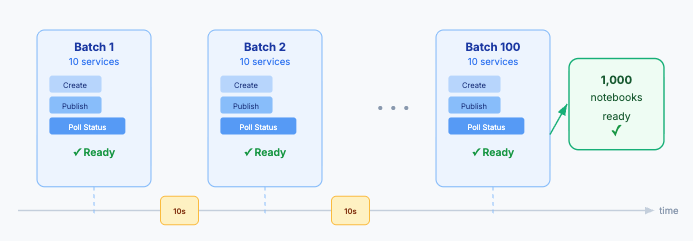
Running a hackathon is hard. Running a GPU-powered hackathon for thousands of participants — where every developer needs a fully configured environment (notebooks, developer pod etc) with dedicated GPU resources, ready to go the moment the event kicks off — is an entirely different class of problem. This is exactly where Rafay's platform has helped change the game for GPU Cloud providers.

GuardDuty

GPU Cloud Billing: From Usage Metering to Billing

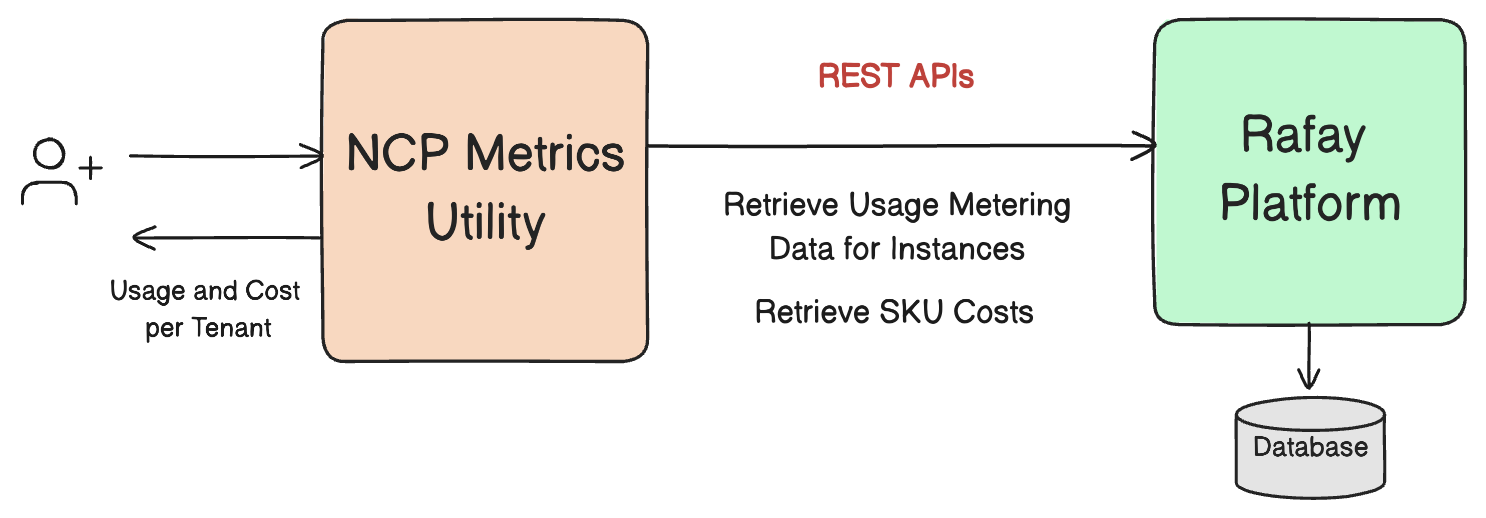
Cloud providers building GPU or Neo Cloud services face a universal challenge: how to turn resource consumption into revenue with accuracy, automation, and operational efficiency. In our previous blog, we demonstrated how to programmatically retrieve usage data from Rafay’s Usage Metering APIs and generate structured CSVs for downstream processing in an external billing platform.

In this follow-up blog, we take the next step toward a complete billing workflow—automatically transforming usage into billable cost using SKU-specific pricing. With GPU clouds scaling faster than ever and enterprise AI workloads becoming increasingly dynamic, providers must ensure their billing engine is consistent, transparent, and tightly integrated with their platform. The enhancements described in this blog are designed exactly for that.

Architecture

Goodbye to Ingress NGINX – What Happens Next?

The Kubernetes community has officially started the countdown to retire Ingress NGINX, one of the most widely used ingress controllers in the ecosystem.

SIG Network and the Security Response Committee have announced that Ingress NGINX will move to best-effort maintenance until March 2026, after which there will be no new releases, no bug fixes, and no security updates. 

At the same time, the broader networking story in Kubernetes is evolving: Gateway API is now positioned as the successor to Ingress. In this blog, we describe why this is happening, when a replacement make sense, and how/when you should migrate.

How GPU Clouds Deliver NVIDIA Run:ai as Self-Service with Rafay GPU PaaS

As the demand for AI training and inference surges, GPU Clouds are increasingly looking to offer their users higher-level, turnkey AI services, not just raw GPU instances. Some customers may be familiar with NVIDIA Run:ai as an AI workload and GPU orchestration platform.

Delivering NVIDIA Run:ai as a scalable, repeatable managed service—something customers can select and provision with a few clicks—requires deep automation, lifecycle management, and tenant isolation capabilities. This is exactly what Rafay provides.

With Rafay, GPU Clouds, including NVIDIA Cloud Partners, can deliver NVIDIA Run:ai as a managed service with self-service provisioning, ensuring customers receive a fully configured NVIDIA Run:ai environment automatically, complete with GPU infrastructure, a Kubernetes cluster, necessary operators, and a ready-to-use NVIDIA Run:ai tenant. This post explains how Rafay enables cloud providers to industrialize NVIDIA Run:ai provisioning into a consistent, production-ready managed service.

Run:AI via Self Service

Self-Service Fractional GPU Memory with Rafay GPU PaaS

In Part-1, we explored how Rafay GPU PaaS empowers developers to use fractional GPUs, allowing multiple workloads to share GPU compute efficiently. This enabled better utilization and cost control — without compromising isolation or performance.

In Part-2, we will show how you can enhance this by provide users the means to select fractional GPU memory. While fractional GPUs provide a share of the GPU’s compute cores, different workloads have dramatically different GPU memory needs. With this update, developers can now choose exactly how much GPU memory they want for their pods — bringing fine-grained control, better scheduling, and cost efficiency.

Fractional GPU Memory

Self-Service Fractional GPUs with Rafay GPU PaaS

Enterprises and GPU Cloud providers are rapidly evolving toward a self-service model for developers and data scientists. They want to provide instant access to high-performance compute — especially GPUs — while keeping utilization high and costs under control.

Rafay GPU PaaS enables enterprises and GPU Clouds to achieve exactly that: developers and data scientists can spin up resources such as Developer Pods or Jupyter Notebooks backed by fractional GPUs, directly from an intuitive self-service interface.

This is Part-1 in a multi-part series on end user, self service access to Fractional GPU based AI/ML resources.

Fractional GPU

NVIDIA NIM Operator: Bringing AI Model Deployment to the Kubernetes Era

In the previous blog, we learnt the basics about NIM (NVIDIA Inference Microservices). In this follow-on blog, we will do a deep dive into the NIM Kubernetes Operator, a Kubernetes-native extension that automates the deployment and management of NVIDIA’s NIM containers. By combining the strengths of Kubernetes orchestration with NVIDIA’s optimized inference stack, the NIM Operator makes it dramatically easier to deliver production-grade generative AI at scale.

NIM Operator

NVIDIA NIM: Why It Matters—and How It Stacks Up

Generative AI is moving from experiments to production, and the bottleneck is no longer training—it’s serving: getting high-quality model inference running reliably, efficiently, and securely across clouds, data centers, and the edge.

NVIDIA’s answer is NIM (NVIDIA Inference Microservices). NIM a set of prebuilt, performance-tuned containers that expose industry-standard APIs for popular model families (LLMs, vision, speech) and run anywhere there’s an NVIDIA GPU. Think of NIM as a “batteries-included” model-serving layer that blends TensorRT-LLM optimizations, Triton runtimes, security hardening, and OpenAI-compatible APIs into one deployable unit.

NIM Logo